

Questions to Ask When Choosing a Caterer for Your Charity Fundraiser, Auction, or Gala
July 23, 2026
Event Catering for Networking: Best Light Bites and Refreshments
October 7, 2026
Planning food for a conference is about more than choosing dishes that taste good. The right conference catering should keep attendees energized, fit naturally into the event schedule, accommodate a wide variety of dietary needs, and be easy to eat without slowing down the day.
Whether you’re planning a half-day training session, a full-day corporate conference, a multi-day convention, or an event that includes off-site tours and bus trips, your catering plan should match the way attendees will actually move through the event.
Here are some of the best foods to serve at a conference and how to build a catering schedule that works.
Half-Day Conferences: Keep It Simple and Energizing
For a half-day conference, you generally don’t need to provide multiple meals. Instead, focus on one primary meal or substantial break, depending on the time of day.
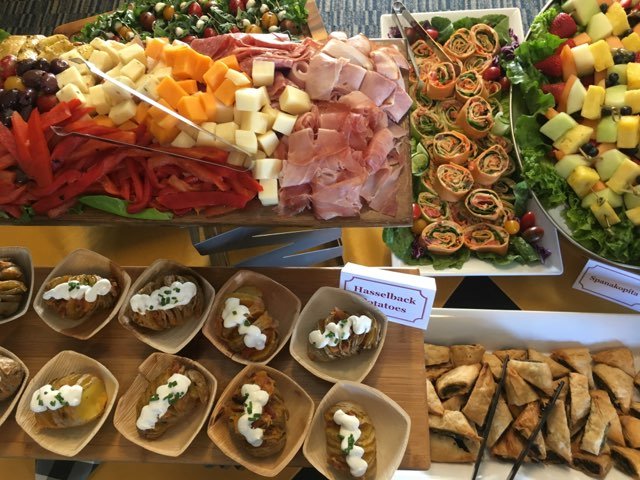
For a morning conference, a continental or expanded continental breakfast is usually ideal. Fresh fruit, pastries, muffins, yogurt, granola, bagels, breakfast sandwiches, and breakfast burritos are all easy to serve and allow guests to eat quickly before sessions begin.
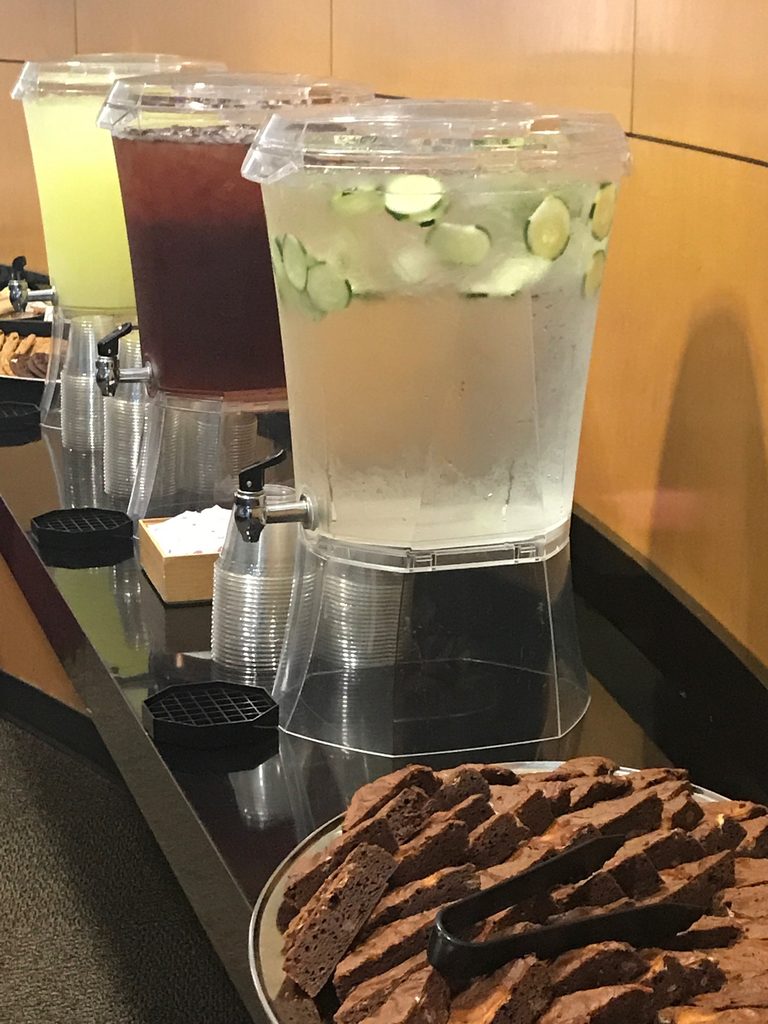
Coffee is essential for most morning conferences, but don’t overlook other beverages. Hot tea, bottled water, juice, and flavored or infused water give attendees additional choices.
For an afternoon conference, consider starting with lunch and offering a lighter snack midway through the afternoon. Sandwiches, wraps, entrée salads, grain bowls, or boxed lunches work especially well because they can be served quickly.
An afternoon snack might include fresh fruit, trail mix, cookies, energy bites, granola bars, pretzels, or individually packaged snacks.
The goal is to provide enough food to keep attendees comfortable and focused without making a short conference feel like a full-day food program.
Full-Day Conferences: Think in Terms of Energy Levels
A full-day conference requires more planning because attendees may be on-site for eight hours or longer. A successful schedule usually includes breakfast, lunch, beverages throughout the day, and at least one snack break.
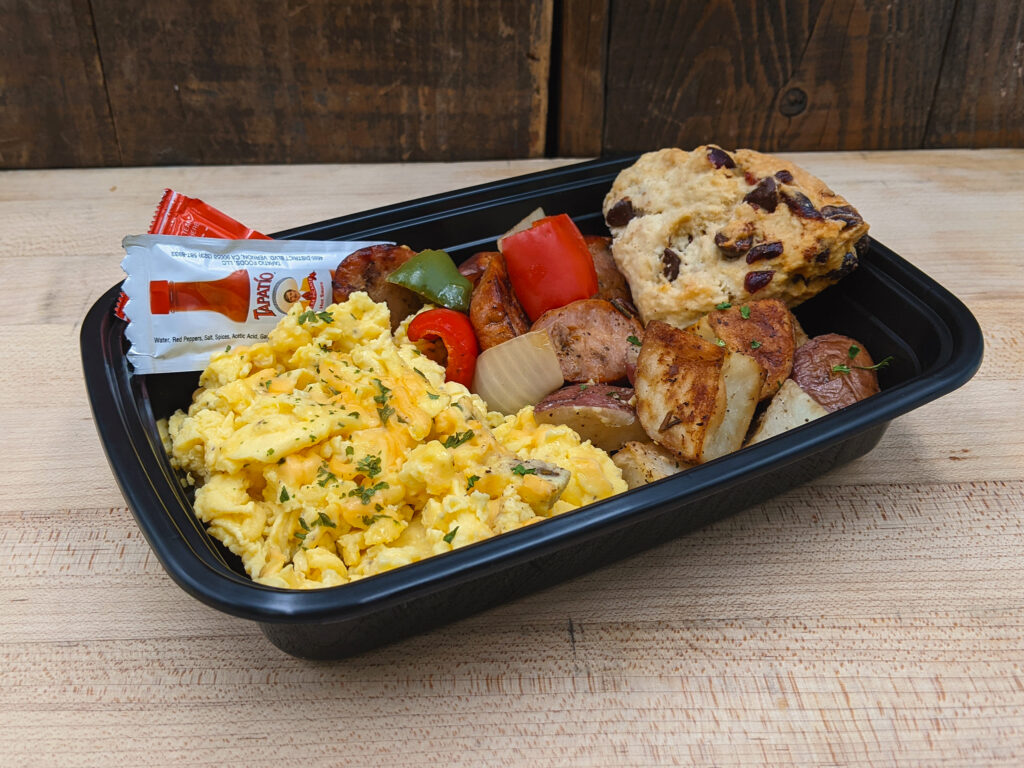
Breakfast should provide a combination of carbohydrates and protein. In addition to pastries and fruit, consider scrambled eggs, breakfast potatoes, breakfast sandwiches, oatmeal, yogurt, or breakfast burritos.
For lunch, variety becomes important.
Buffets work well for larger conferences because guests can select their preferred foods. Popular options include grilled chicken, pasta dishes, taco or fajita bars, Mediterranean-inspired meals, BBQ, Asian-inspired rice bowls, and entrée salads.
Boxed lunches are another excellent conference option, particularly when lunch needs to fit into a tight schedule. A well-designed boxed lunch might include a sandwich or wrap, side salad, chips, fresh fruit, and dessert. Vegetarian and vegan versions can easily be incorporated into the same service.
The afternoon snack should provide a little boost without becoming another meal. Cookies and brownies are always popular, but consider mixing sweet and savory options. Popcorn, pretzels, cheese and crackers, fruit, snack bars, trail mix, vegetables with hummus, or energy bites can help attendees make it through those final sessions.
And don’t forget coffee. An afternoon coffee refresh can sometimes be almost as appreciated as the snack itself!
Multi-Day Conferences: Variety Is the Key
Multi-day conferences create an additional challenge: menu fatigue.
Serving turkey sandwiches on Monday might work perfectly. Serving another sandwich buffet Tuesday and boxed sandwiches again Wednesday probably won’t.
Create a catering plan for the entire conference before selecting individual menus. This allows you to intentionally rotate proteins, cuisines, sides, desserts, and service styles.
For example, the first day might feature sandwiches and salads for lunch. Day two could offer a Mexican-inspired buffet with grilled chicken, seasoned beef, rice, beans, tortillas, salsa, and toppings. Day three could feature Mediterranean chicken, rice or couscous, roasted vegetables, hummus, pita, and salad.
Breakfasts should rotate as well. One morning might feature pastries, yogurt, and fruit, while another includes hot breakfast sandwiches or burritos. A third could feature scrambled eggs, breakfast potatoes, sausage, fruit, and pastries.
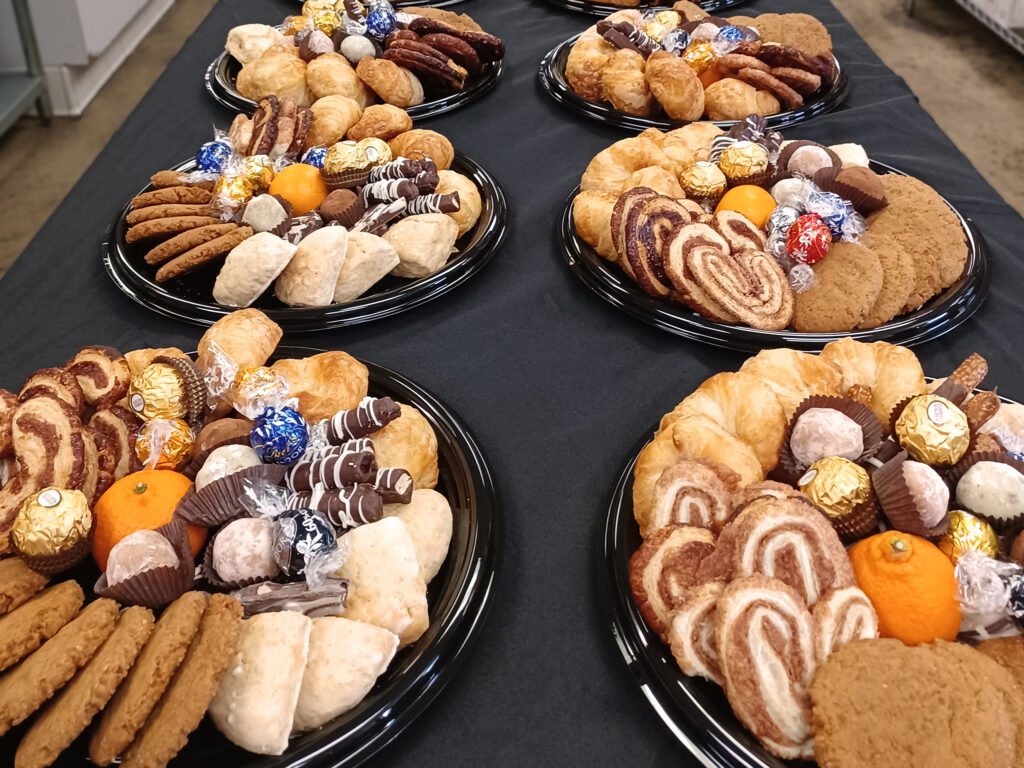
Snack breaks can also be themed. Try a healthy break with fruit, hummus, vegetables, and granola; a classic snack break with cookies, brownies, popcorn, and pretzels; or an afternoon pick-me-up featuring coffee, tea, energy bites, and snack bars.
The longer the conference, the more important variety becomes.
Boxed Lunches for Conference Sessions
Boxed lunches remain one of the most practical conference catering options because they provide portion control, simplify distribution, and allow attendees to eat almost anywhere.
The best conference boxed lunches contain foods that travel well and don’t require complicated assembly.
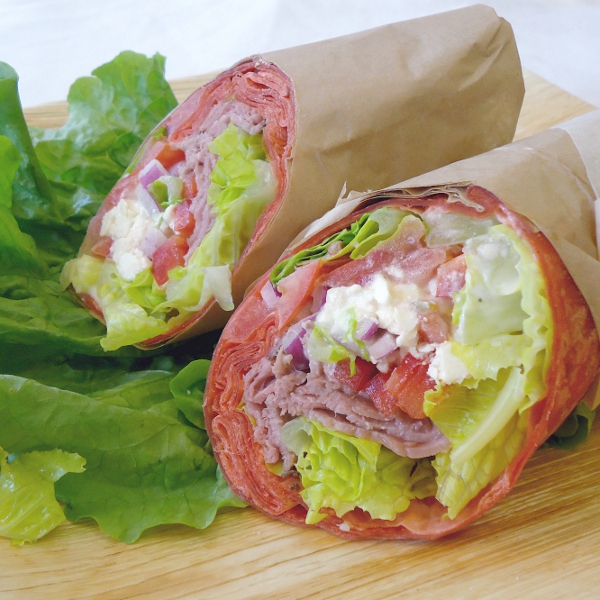
Sandwiches and wraps are classics for a reason. Turkey and cheese, roast beef, grilled chicken, chicken salad, vegetarian Mediterranean wraps, and grilled vegetable sandwiches can provide plenty of variety.
A complete boxed lunch should generally contain a main entrée, one or two sides, and something sweet. Chips, pasta salad, potato salad, fresh fruit, cookies, brownies, and snack bars are all practical options.
Make vegetarian, vegan, gluten-friendly, and other special-diet meals easy to identify. Clearly labeled meals prevent guests from opening multiple boxes while searching for the correct option.
Off-Site Bus Trips and Excursions
Many conferences include facility tours, sightseeing excursions, team-building activities, or other off-site bus trips. These require a different catering strategy.
Food should be portable, durable, individually packaged, and easy to distribute.
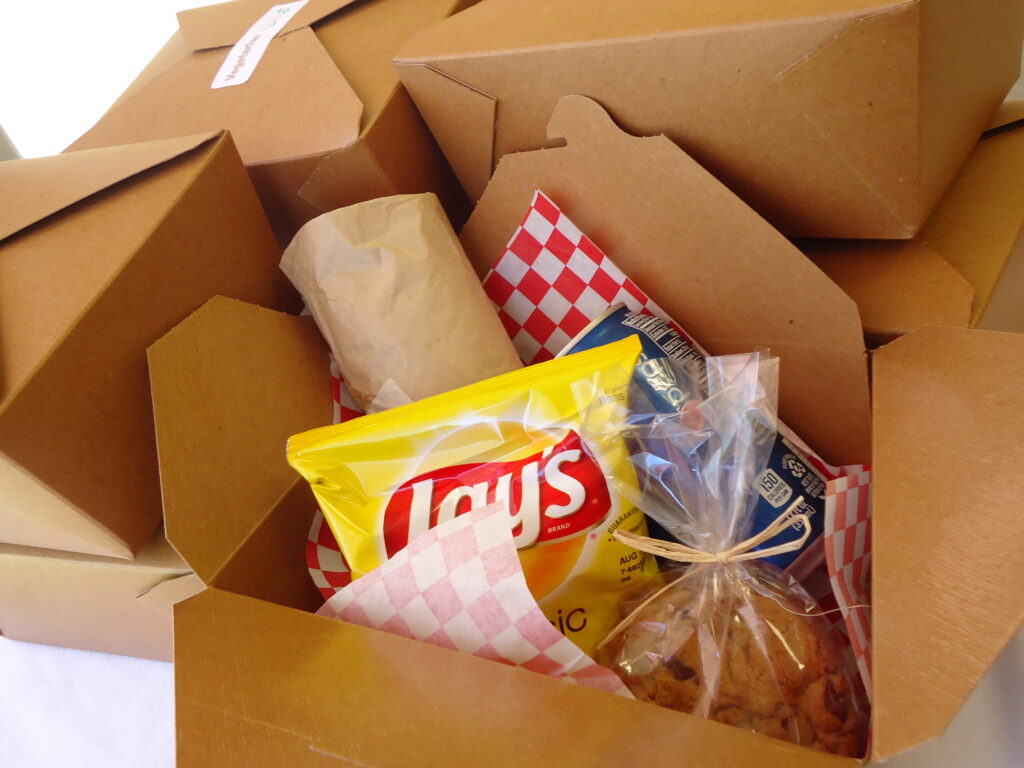
A boxed sandwich or wrap lunch works extremely well. Avoid foods that require knives, extensive assembly, or multiple containers. If attendees will actually eat while riding the bus, choose foods that create minimal mess and can comfortably be eaten from the lap.
Consider including a sandwich or wrap, individually packaged chips, whole fruit, cookie, and bottled water.
For longer excursions, snacks can be packed separately. Trail mix, granola bars, pretzels, crackers, dried fruit, popcorn, and individually packaged cookies are all good choices because they don’t require refrigeration during short trips and produce relatively little mess.
Always think about logistics when ordering off-site conference catering. Ask where the food will be stored, how long it will be traveling, whether refrigeration is available, and where attendees will actually eat.
Don’t Forget Dietary Restrictions
Modern conference catering needs to accommodate a wide range of dietary preferences and restrictions.
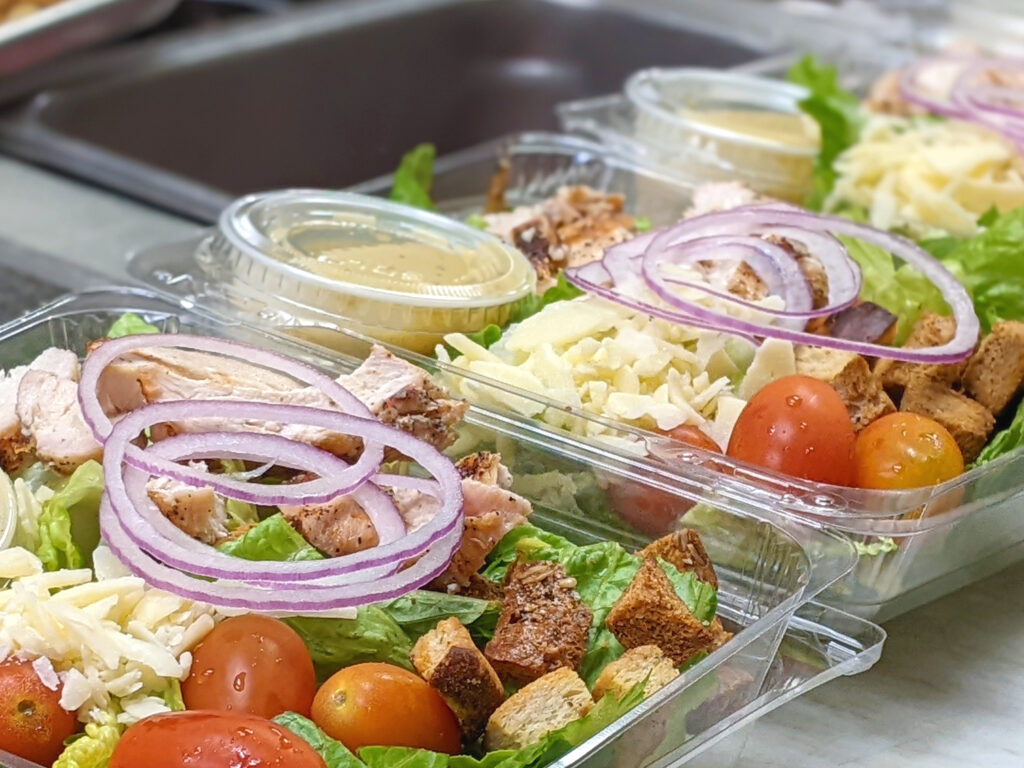
Vegetarian options should be part of the primary menu rather than an afterthought. Depending on your attendees, you may also need vegan, gluten-friendly, dairy-free, or allergen-conscious meals.
Registration forms are a great place to collect dietary information ahead of time. Providing your caterer with accurate counts several days before the conference can significantly improve service and reduce waste.
The Best Conference Food Is Food That Fits the Schedule
There isn’t one perfect conference menu. The best foods are the ones that fit the attendees, location, schedule, and style of the event.
A 90-minute executive meeting requires a very different catering plan than a three-day conference with 500 attendees, breakout sessions, evening receptions, and off-site excursions.
When planning conference catering, start with the schedule first and the menu second. Identify when attendees arrive, when breaks occur, how much time is available for lunch, whether people need to move between sessions, and when groups leave the property.
Then build the food program around those moments.
An experienced conference caterer can help coordinate everything from morning coffee and breakfast to buffet lunches, boxed meals, afternoon snacks, beverages, and meals for off-site activities. The result should feel effortless to attendees, even though plenty of planning happened behind the scenes.
If you’re planning a conference in Sacramento or the surrounding area, Lunch Box Express can help develop a catering plan specifically around your conference schedule. From individually packaged breakfasts and boxed lunches to full buffets, snack breaks, beverages, and meals for off-site bus trips, we can help keep your attendees well-fed and your conference running on schedule.